$ cat research/multiphysics.md
Multiphysics Simulation for Clean Energy Innovation
The ever-growing energy demands, increasingly serious global warming threats, and the eager needs for sustainable economy development compel us to urgently transit energy sources from fossil fuels to cleaner, carbon-free energies such as hydrogen (H₂). However, the existing hydrogen production technology either is too costly or emits too much greenhouse gas.
In this research initiative, we are committed to expediting the energy transition by optimizing the process and repurposing subsurface petroleum resources for clean hydrogen production. Our objectives are twofold: (1) to comprehend the intricate couplings among electromagnetic radiation, heat transfer, fluid flow, and reactant-catalyst interactions during hydrogen generation under microwave/radiofrequency (RF) heating; and (2) to develop a computational tool for optimizing the fossil fuel-to-hydrogen conversion process.
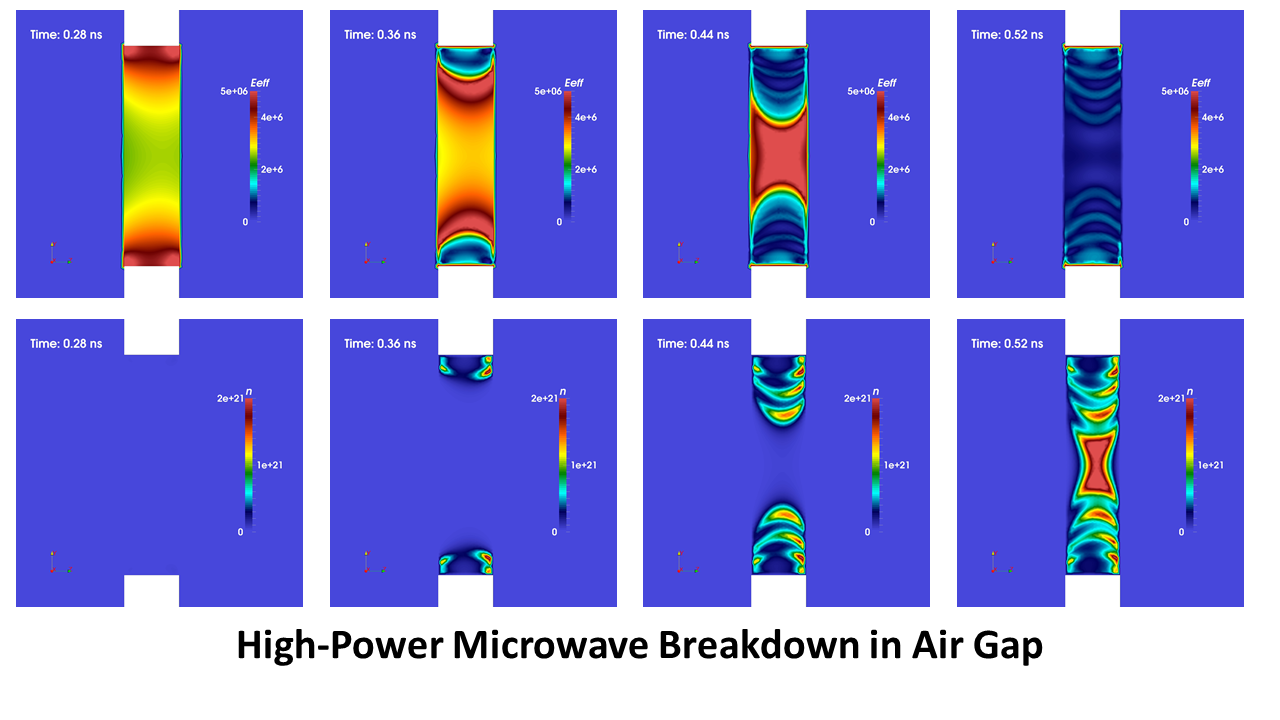
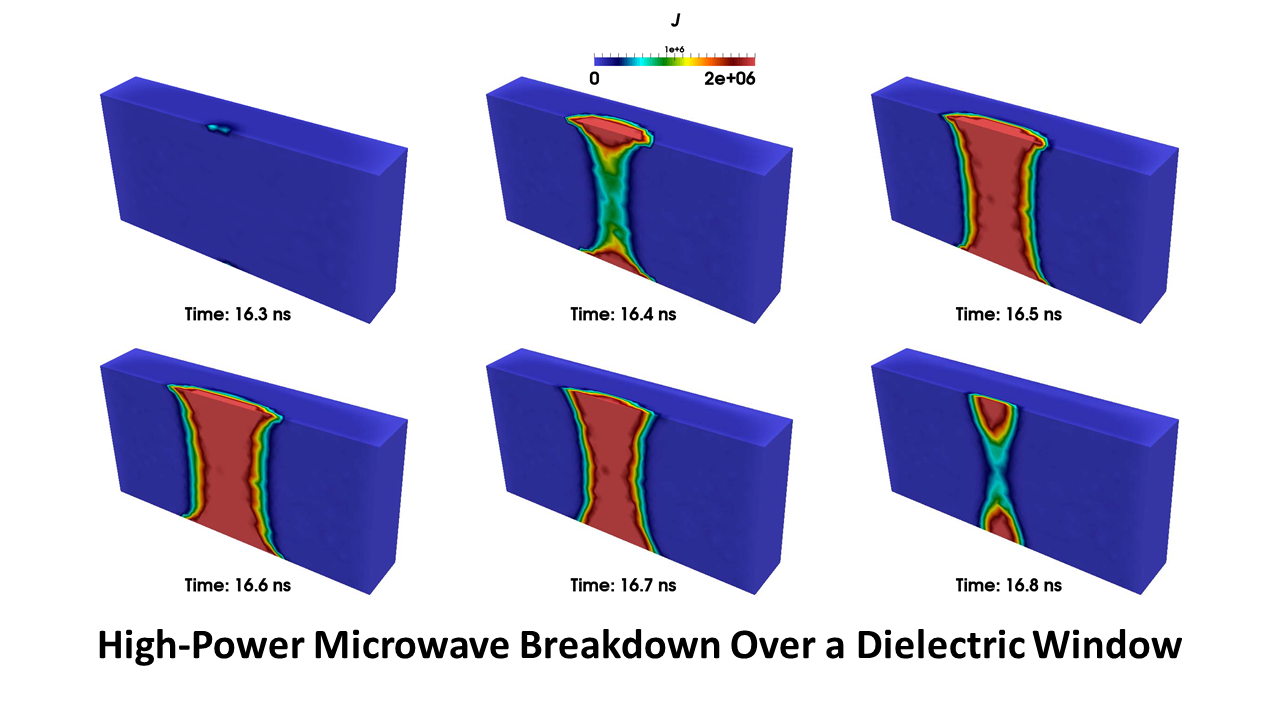
Our group has developed a nodal discontinuous Galerkin (NDG) method for modeling and simulating multiphysics problems including high-power microwave air breakdown, electromagnetic-plasma interactions, and ferromagnetic-thermal coupled problems. This method, based on a novel finite element formulation stable at all frequencies, facilitates accurate representation across various scales. Recent collaborations focus on controlling microwave heating efficiency via material selection and geometry in high-temperature gas-phase reactions for clean hydrogen generation.
> examples
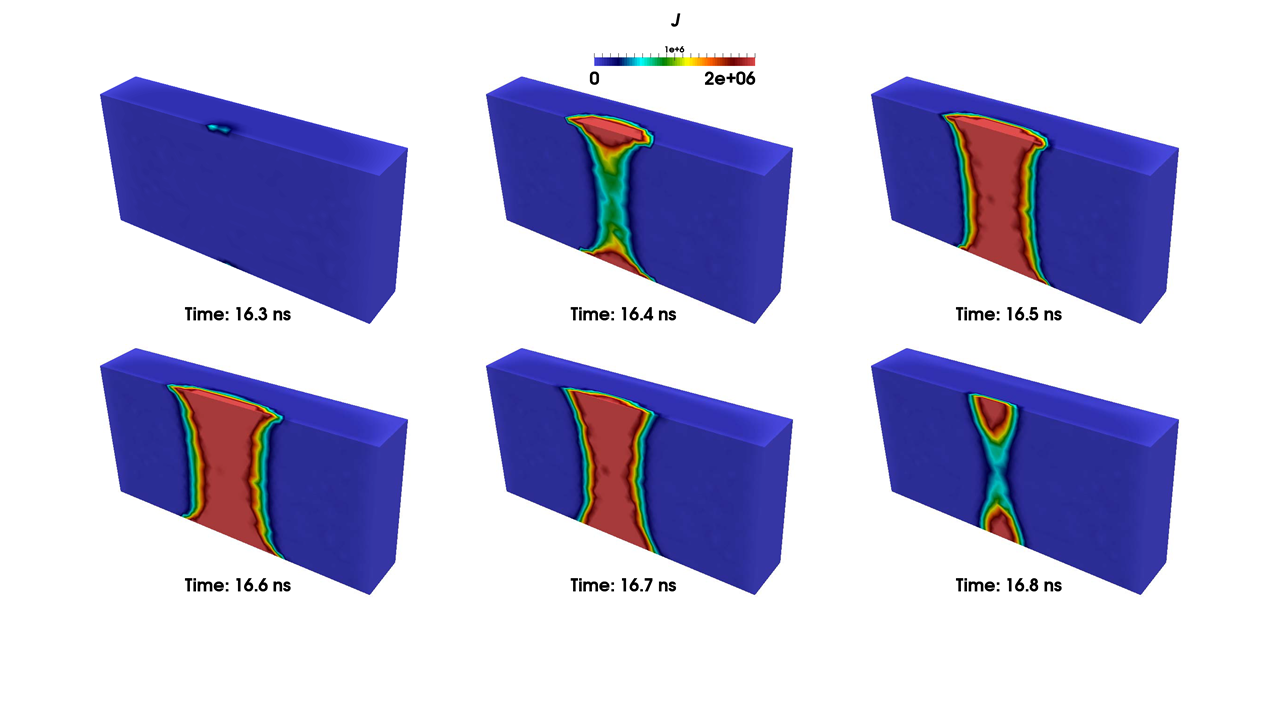
High-power microwave breakdown in air, plasma formation
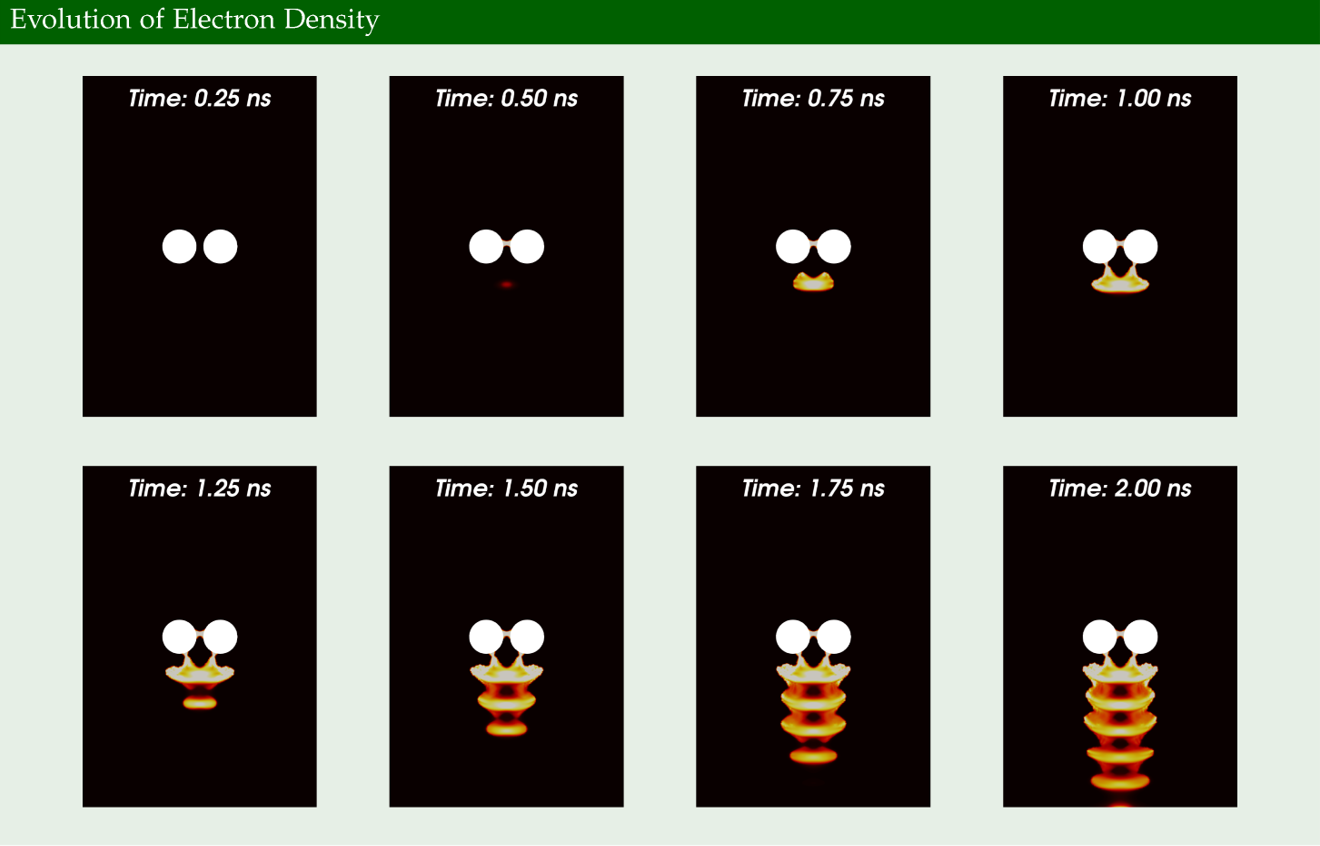
Electric field and plasma energy distributions
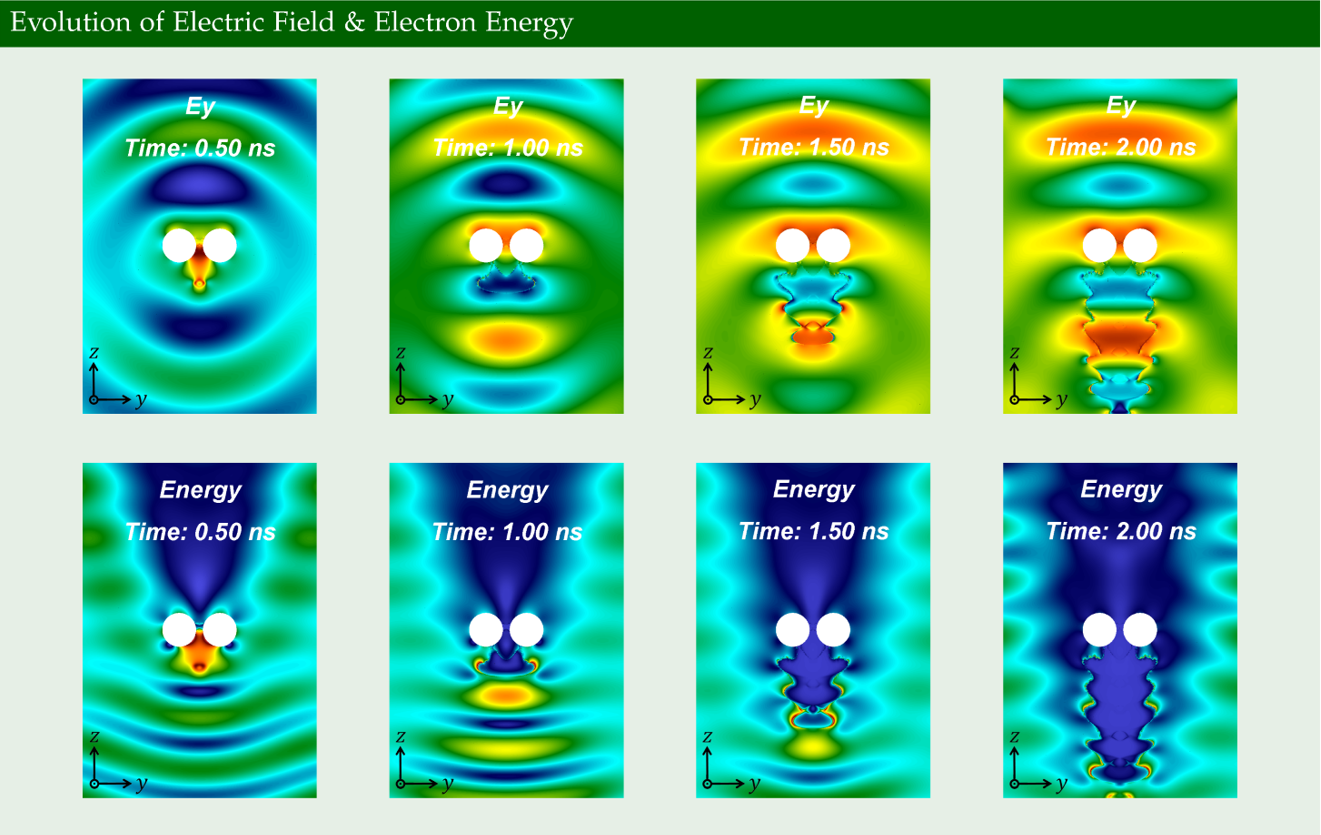
Electromagnetic field distributions in coupled simulations
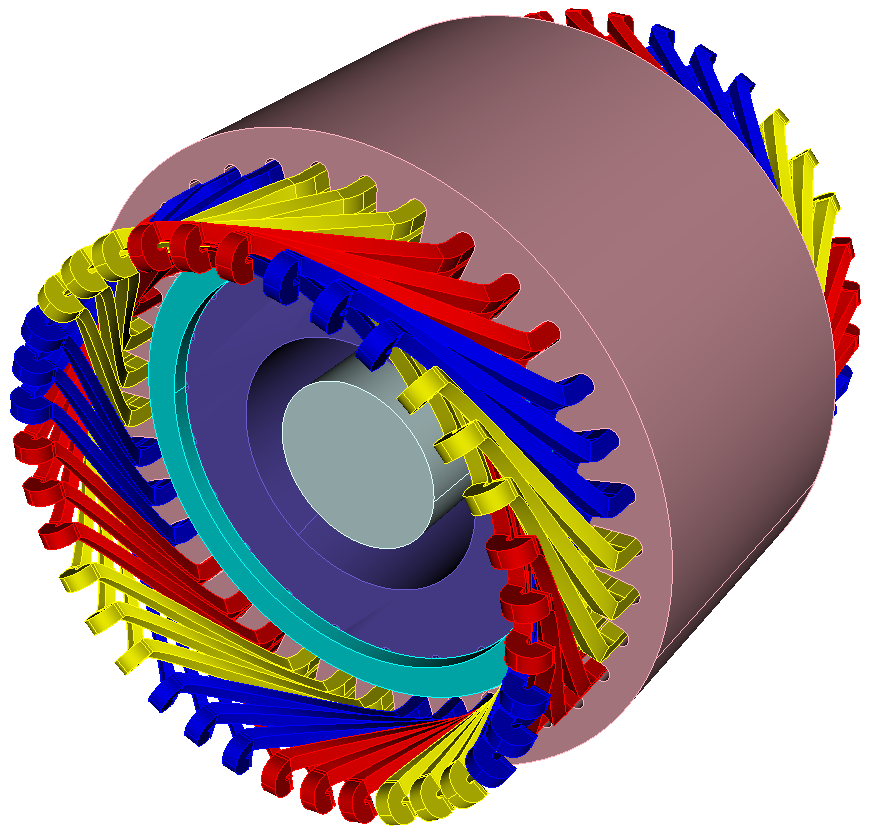
Nonlinear ferromagnetic-thermal co-simulation of three-phase induction motor
Microwave-assisted in-situ hydrogen generation: simulation and optimization
Controlling microwave plasma heating efficiency via material and geometry for clean H₂
> funding_agencies
> key_publications
Controlling microwave heating efficiency via material selection and geometry in high-temperature gas-phase reactions
T. Barker, X. Li, Su Yan, J. Chen, and X. Shan, Ind. Eng. Chem. Res., 2025
Physics-encoded graph element networks for thermal surrogate modeling and heat source localization on irregular FEM meshes
N. Hosen, M. Anee, and Su Yan, Proc. ICEAA-IEEE APWC 2026, Toyama, Japan, Sept., 2026
Nonlinear finite element analysis of thermal runaway in microwave-heated shale using a C∞ smooth conductivity model
M. Anee and Su Yan, Proc. IEEE MTT-S Int. Conf. Numer. Electromagn. Multiphys. Model. Optim. (NEMO), Valencia, Spain, July, 2026
Utilize the material and geometry to control the microwave plasma heating efficiency for clean hydrogen generation
X. Shan, T. Barker, X. Li, J. Chen, Su Yan, L. Grabow, and X. Wu, 247th Electrochemical Society (ECS) Meeting, Montréal, Canada, May, 2025
Telescope coronagraph focal plane mask design using the method of moments and a constrained least squares
Su Yan, L. Wise, and P. Chen, 2023 IEEE MTT-S International Conference on Numerical Electromagnetic and Multiphysics Modeling and Optimization, Winnipeg, Canada, June, 2023
An efficient solution of low-frequency magnetic problems with voltage sources using all-frequency stable formulation
M. Mekonnen and Su Yan, 2023 IEEE MTT-S International Conference on Numerical Electromagnetic and Multiphysics Modeling and Optimization, Winnipeg, Canada, June, 2023
Adaptive Discontinuous Galerkin Time-Domain Method for the Modeling and Simulation of Electromagnetic and Multiphysics Problems
Su Yan, Advances in Time-Domain Computational Electromagnetic Methods, 2022
Multiphysics Modeling with Computational Electromagnetics
J.-M. Jin and Su Yan, Encyclopedia of RF and Microwave Engineering, 2021